
Jiu jitsu · 8 min read
Jiu Jitsu Injuries: How to Keep Rolling Without Making It Worse
Most jiu jitsu injuries do not require you to stop training. They require you to change what training looks like for a few weeks, and most people do the opposite: full rest, then straight back into competition rounds.
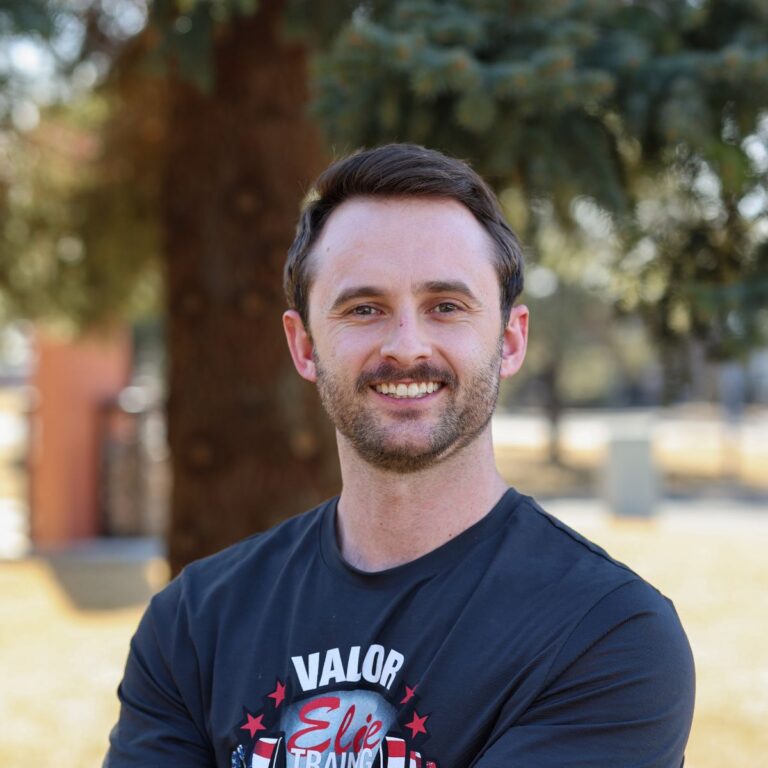
Written and medically reviewed by Dr. Alec Tramblay, DC
Chiropractor & owner, Fort Collins · September 20, 2026
The short answer
The most common jiu jitsu injuries, in the neck, shoulder, knee and lower back, rarely need a complete stop. In most cases you can keep training by choosing partners and positions that do not load the injured tissue, cutting round volume instead of skipping class, and adding targeted strength work off the mat. Full rest usually makes the return worse, because the tissue loses capacity while the sport stays exactly as demanding as it was.
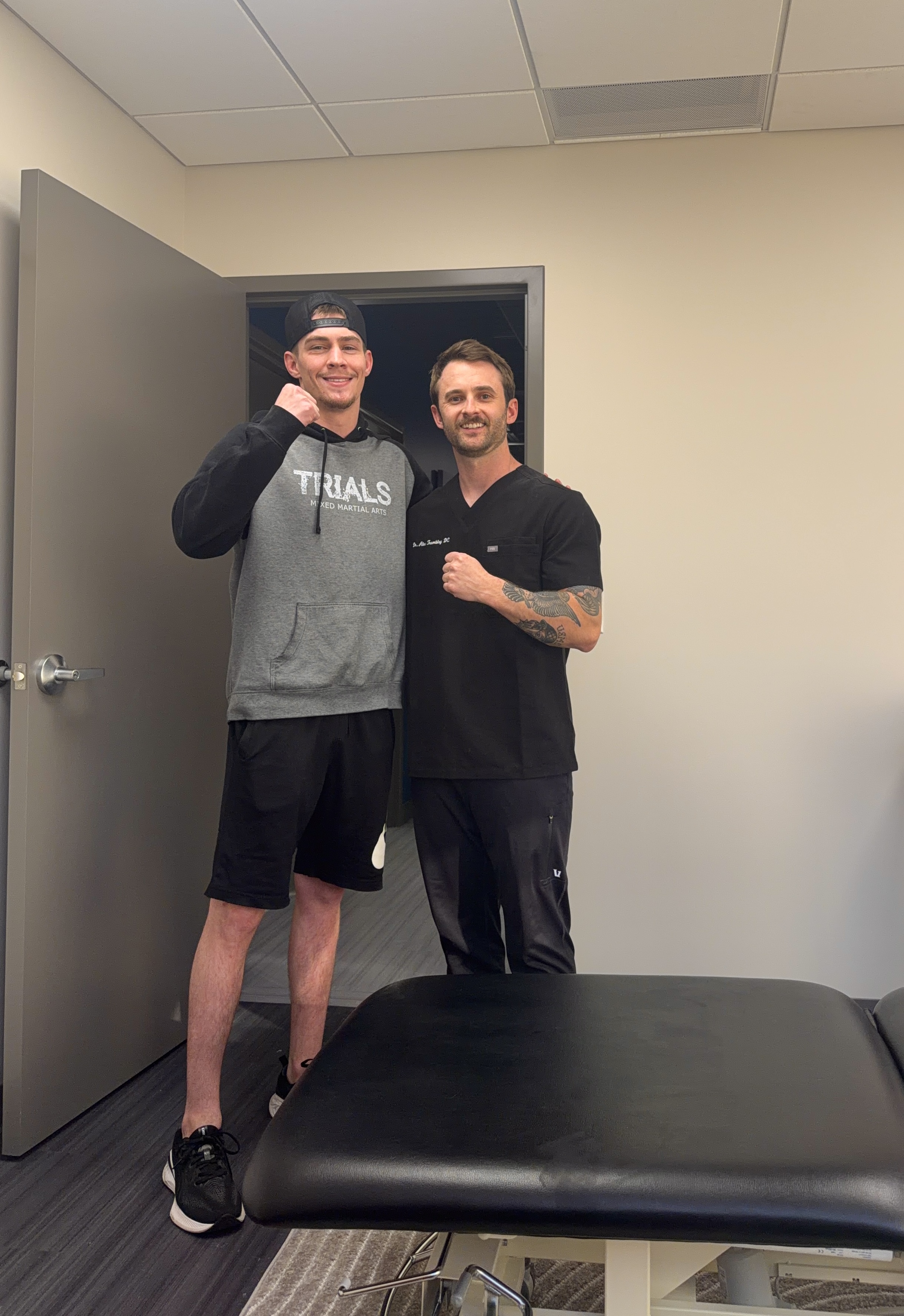
The four injuries that show up most
Different academies, same list. These four account for most of the training time people lose.
- —Neck: stiffness and nerve-type symptoms from stacking, guard retention and defending pressure passes.
- —Shoulder: irritation or instability from kimura and americana positions, posting on a straight arm, and hitting the mat awkwardly.
- —Knee: MCL and meniscus irritation from guard passing, knee reaping, and getting stuck in deep half.
- —Low back: pain from inverting, stacking, and constant defensive bridging under a heavier training partner.
Why total rest usually backfires
Two weeks off does calm most things down. The problem is what happens next: you come back to the same rounds, with the same partners, but with less strength and less tissue tolerance than you had when you got hurt.
Jiu jitsu is not a sport you can ease into passively. The demand is set by whoever is on top of you. So the plan has to be to keep the body exposed to load in a controlled way while the injured area recovers, rather than taking all load away and hoping.
How to modify a round instead of skipping class
Almost every injury has a version of training you can still do safely. The skill is knowing what to take out.
- —Choose your partners deliberately. Training with people who will listen when you say no beats training with whoever is next in line.
- —Start from a position rather than from standing or from scrambles, so nothing sudden happens to the injured area.
- —Cap your rounds. Three controlled rounds beats six where the last two are pure survival.
- —Do positional sparring or flow rolling instead of competition-pace rounds for a few weeks.
- —Tap early on anything near the injury. Nobody gets better at jiu jitsu by defending a kimura on an irritated shoulder.
- —Take inversion, reaping and stacking off the menu while a neck, knee or back is healing.
What actually protects the joint off the mat
Mat time builds skill. It does not build much tissue capacity, because the loads are unpredictable and rarely progressive. That comes from the gym.
- —Neck: loaded isometrics in all four directions, built up slowly, are the best protection against the stacking and pressure positions.
- —Shoulder: external rotation strength and heavy rowing, plus controlled work at end range so an arm caught in a bad spot has something to resist with.
- —Knee: hamstring strength through range, plus hip internal and external rotation work, which is what most knee reaping and deep half injuries expose.
- —Low back: hinge patterns loaded properly, plus anti-rotation and carry work for the bracing you use every time you defend from bottom.
- —Grip and forearm work, which keeps the fingers and elbows out of trouble over a long training year.
Injuries you should not train through
There is a line, and these are on the wrong side of it. Get assessed before your next class.
- —Numbness, tingling or weakness running down an arm or leg.
- —A knee that gives way, locks, or swelled up within a few hours of the injury.
- —A shoulder that has dislocated or feels like it is going to.
- —Neck pain with headaches, dizziness or symptoms into both arms.
- —Pain that is getting worse week on week despite modifying what you do.
Training through it with an actual plan
The approach here is built for this: hands-on treatment for what hurts, a clear list of what to modify on the mat, and strength work off the mat that makes the position that injured you less dangerous next time.
Dr. Alec trains jiu jitsu, which means the conversation starts from what your rounds actually look like rather than from an instruction to rest for six weeks. Plans are built around your training schedule and any competition dates you have on the calendar.
- —See how we handle sports injuries and return to training
- —/services/sports-injury/
Common questions
Can I roll with a shoulder injury?+
Often yes, with rules. Start from positions rather than scrambles, avoid posting on a straight arm, tap early on anything near the shoulder, and cut your round count. If the shoulder feels unstable or has dislocated, get it assessed first.
How long after a knee injury can I train jiu jitsu again?+
It depends on the tissue, but most MCL and meniscus irritations allow modified training within one to three weeks and full rounds within six to twelve, provided strength work is happening alongside. A knee that locks, gives way or swelled rapidly needs assessment first.
Should I wear a knee brace for BJJ?+
A brace can be useful short term for confidence and for keeping the knee out of end range while it settles. It is not a substitute for building hamstring and hip strength, and most people should be working toward not needing it.
Do chiropractors help with jiu jitsu injuries?+
The useful version does. Adjustments and soft tissue work can reduce pain and restore motion, but on their own they do not rebuild the tissue capacity the sport demands. Look for care that combines hands-on treatment with progressive strength work and specific guidance about what to change on the mat.
Is neck pain normal in jiu jitsu?+
Common, yes. Normal, no. Persistent neck pain usually means neck strength has not kept up with the pressure the sport applies. Loaded neck isometrics plus a few weeks without stacking and inversion resolve most cases.
Where can I get treated in Fort Collins?+
Tier 1 Performance and Rehab is at 3350 Eastbrook Dr Ste 120, Fort Collins, CO 80525, and works with grapplers from Fort Collins, Loveland, Timnath, Windsor and Wellington. Start with a free discovery call.
Related conditions we treat
Still dealing with this after a few weeks?
Book a free discovery call. We will tell you what is going on, whether this is something we treat, and what a plan would look like — before you commit to anything.
Book Free Discovery Call